
Whisky tourism has become big business with Diageo hosting over a million people at its distilleries and Johnnie Walker Experience in 2023. But whether overall visitor numbers for last year have topped the record 2019 remains to be seen, reports Ian Fraser…
Scotland’s former first minister Humza Yousaf did whisky tourism a service when, just days after becoming Scotland’s first minister in March 2023, he scrapped plans for a ban on alcohol advertising in Scotland.
Such a ban could have forced distilleries to paint over their signage, and made it near impossible for them to adequately promote their brands on home turf – seriously damaging the whisky tourism sector. So, the industry heaved a massive sigh of relief when Yousaf sent the proposal, introduced by his predecessor Nicola Sturgeon, "back to the drawing board".
The company that stood to lose more than most from the proposed ban was Diageo. The Soho-based spirits giant had invested £85 million in converting the eight-storey former House of Fraser department store in Edinburgh’s West End into Johnnie Walker Princes Street. That was part of £185m investment programme for the whisky tourism sector, initiated in April 2018, which saw 12 of the company’s single-malt whisky distillery visitor centres upgraded, with a special focus on the "Four Corners distilleries" – Glenkinchie in East Lothian, Caol Ila on Islay, Clynelish in Sutherland and Cardhu in Morayshire. Diageo also reopened the "ghost" distilleries at Port Ellen and Brora.
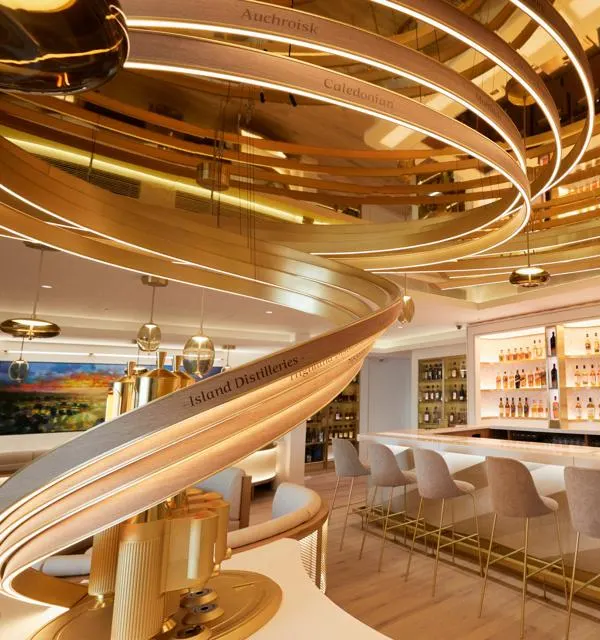
With the advertising ban kicked into touch, the investment seems to be paying off, with Diageo’s sites across Scotland attracting a record 1.13 million visitors in 2023, up from 440,000 in 2017. Johnnie Walker Princes Street, which opened in September 2021 complete with audiovisual legerdemain and a rooftop bar, attracted 359,000 whisky aficionados and neophytes from 131 countries in 2023. While that was fewer than the Scotch Whisky Experience on Castlehill, at the top of the Royal Mile, which had 401,000 visitors in 2023 – nipping at the heels of the granddaddy of the sector after less than three years isn't bad at all. The Princes Street attraction has also picked up several international awards, including Europe’s Leading Spirit Tourism Experience 2024 at the World Travel Awards.
Diageo’s second most popular site is Talisker on Skye, which pulled in 184,000 visitors last year, up 211% from 59,000 in 2019. Oban had 157,000 visitors, followed by Blair Athol with 82,000, the Singleton of Glen Ord with 64,000, Lagavulin with 57,000, Dalwhinnie with 55,000 and Glenkinchie with 37,000. Diageo Scotland’s managing director of brand homes, Katie Harris, says: "We’re incredibly proud to have welcomed more than a million people for the first time in Scotland, but we believe this is just the start and there is a powerful opportunity for further growth."
The Scotch Whisky Association is less bullish about the whisky tourism outlook than the sector’s largest player. In September 2023, the SWA released industry-wide figures for 2022, showing 2,004,918 people visited a Scotch whisky distillery or visitor centre that year. Half came from the UK, with 388,000 from the US, 96,000 from Germany and 59,000 each from the Netherlands. However the numbers were actually down on 2019 – when 2,610,678 visits were made, though significantly up on the plague years of 2021 and 2020, when visitor numbers were suppressed by Covid-19. The SWA said visitors spent £85 million in 2022, a 90% increase on 2010.
However the SWA’s chief executive Mark Kent warned that the bounce-back from the Covid years "should not be taken for granted", with the SWA adding that: "Despite the 2022 recovery, the 2023 tourism season has been more difficult. The cost-of-living crisis, the impact of the 10.1% tax increase in August 2023, and ongoing infrastructure challenges mean that the positive impact of whisky tourism to the Scottish economy cannot be taken for granted."
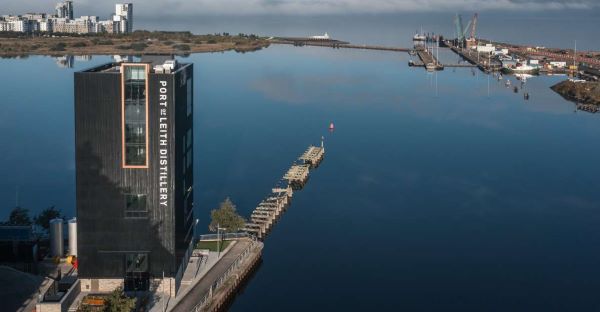
One newly reopened distillery that could buck the trend is Ian Macleod Distillers’ Rosebank distillery in Falkirk, which opened to the public on 7 June after a lengthy restoration. Already named as a five-star attraction by VisitScotland, the site is offering three types of tour. The new Port of Leith Distillery, which opened last October and whose tour prices range from £20 to £26, is also expected to be hit. And West Lothian-based Aceo and Historic Environment Scotland, has announced plans to resurrect the Dallas Dhu distillery in Forres – complete with state-of-the-art visitor centre, cafe and restaurant.
However, the market is becoming more saturated and competitive, and even distilleries offering tours with supremely knowledgeable and relatable guides, personalised tastings, branded museums, interactive experiences and beautifully interior-designed shops may struggle to pull in the punters. This probably explains the recent tendency for distilleries to strengthen their offer by adding accommodation. Examples include field-to-bottle distillery Arbikie near Montrose, which recently started renting out mirrored cabins from the Estonian company ÖÖD, complete with saunas.
Chivas Brothers also recently refurbished and reopened Linn House, a Victorian country house in Keith near its Strathisla distillery, which was previously only available to invited guests. Chivas’ brand advocacy head Jacques-Henri Brive believes whisky fans are increasingly looking for "experiences" beyond just product.
In similar vein, French fashion giant LVMH, which owns Glenmorangie and Ardbeg, bought the Islay Hotel in Port Ellen, with the intention of reopening it under the name Ardbeg House, complete with "a witty and distinctly Ardbeggian restyling of every floor". Glenturret in Crieff, which was sold by Edrington Group to Zurich-headquartered glassmaking firm Lalique Group in 2019, also accommodates the only Lalique glassware boutique in Scotland as well as a two Michelin-starred restaurant, one of only two such eateries in Scotland.
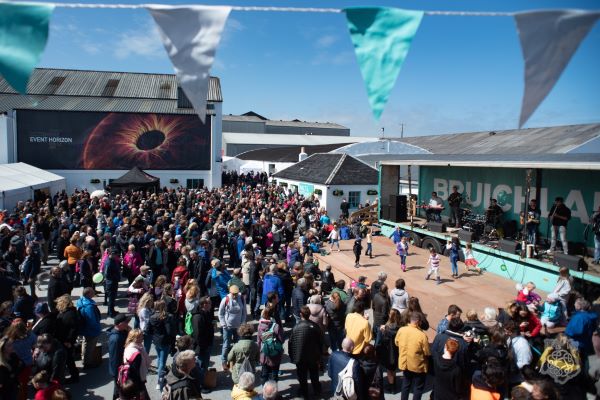
Live music and other forms of live entertainment are increasingly also becoming part of the mix. There are 32 whisky festivals across Scotland, the largest of which, Fèis Ìle, offers plenty of live entertainment and Gaelic culture alongside the drams, as each of the island’s distilleries throws open its doors to provide a programme of ceilidhs and folk nights. The festival attracts up to 20,000 people to Islay in May-June, injecting some £10 million into the local economy. However critics warn Fèis Ìle is becoming too commercial, too dominated by multinationals and is hastening to the Disneyfication of the Hebridean island. Other whisky festivals worthy of note include the Spirit of Speyside Whisky Festival, held every May on Speyside and the Dram Good whisky festival which opens in Edinburgh on 2-3 August.
In a recent comedy sketch "Craig", a surly distillery tour guide played by the comedian Eleanor Morton, expresses contempt for visitors while rubbishing the product itself. Guides along such lines are surely a thing of the past, but Diageo may have found a way of circumventing applications from the likes of Craig with recent advertorials placed in Scottish newspapers including the Edinburgh Evening News. In these the drinks business appealed for actors and other talent to work at its Johnnie Walker Princes Street site. Diageo made clear that "no background in whisky is required... Instead, applicants should be natural presenters and storytellers [with] a passion for hospitality." Fortunately, Scotland is not short of people who can spend their day talking passionately about whisky!